On his CFFC Blog, Admiral Harvey posted the third in a series of messages about the "Practices of Successful Commands". His messages provide a great summary of some of those practices. You can go to his blog HERE.
For much greater detail and the full report on Command Excellence, you should really go HERE.
A short excerpt follows regarding the function of training in superior/excellent commands.
Training in superior commands links directly to combat readiness. Training for 'training's sake' is avoided. If a drill or exercise doesn't advance the combat readiness of the command, then it's changed around until it does.
Top commands don't question the value of training. The wardroom is key in coordinating training activities throughout the command. Each department commits itself to bringing its people up to speed. There is a give-and take in working with other departments to coordinate training activities. Training is targeted to get personnel closer to combat readiness. This drives the effort to keep training realistic and practical.
In outstanding commands all levels are involved in training and development. The wardroom coordinates the training, but the involvement of junior enlisted personnel with critical areas of expertise is crucial to training program success. Top wardrooms make their presence felt by continually monitoring programs to keep their commands combat ready.
Finally, superior commands are committed to the professional development and career planning of their people. Junior officers make sure their people are continuing to advance and qualify. Department heads take the lead in making sure division officers become qualified.
Musings, leadership tidbits and quotes posted by a retired Navy Captain (really just a high performing 2nd Class Petty Officer) who hung up his uniform a bit too early. He still wears his Navy service on his sleeve. He needs to get over that. "ADVANCE WARNING - NO ORIGINAL THOUGHT!" A "self-appointed" lead EVANGELIST for the "cryptologic community". Keeping CRYPTOLOGY alive-one day and Sailor at a time. 2015 is 80th Anniversary of the Naval Security Group.
Monday, December 13, 2010
Sunday, December 12, 2010
Professionalism of our cryptologic force
The professionalism of our force is built upon mastery of a core set of skills that every cryptologic professional must possess. It all starts with a deep understanding of the fundamentals of cryptology, and a requirement that our professionals think clearly, and convey their analysis and assessments just as clearly to our Navy and our nation's decision-makers.
Saturday, December 11, 2010
New Navy CIO's First Blog Post on DONCIO Blog is his last
The CIO's Last Blog
By Terry Halvorsen
Published, December 1, 2010
More HERE. Change is good...
By Terry Halvorsen
Published, December 1, 2010
I'm sure you'll find it interesting and maybe a bit ironic that the new CIO's first blog is his last blog. I believe in the value of social media and believe it has its place in the Department of the Navy. However, as I am focusing on finishing up my duties as Deputy Commander of Navy Cyber Forces and taking the reigns as DON CIO, blogging must be a lower priority. There is much work to be done, and I plan to fully engage with the Navy, Marine Corps and Secretariat level leaders through face-to-face meetings when possible.
More HERE. Change is good...
Friday, December 10, 2010
There is special magic in command at sea.
It is not the job itself, which is mostly the same duties the captain has done before summed up together in new responsibility. It is not even the freedom and independence of the job, which, though large, are far from total. The magic of command is the magic of opportunity. Every captain starts with a clean slate and I urge him to write on it boldly and with pride in his personal signature in the form of a strong command tour in which he accomplishes every reasonable good for his ship.
Captain John Byron
The Captain
USNI Proceedings
September 1982
Thursday, December 9, 2010
CO and XO of MCM Crew Constant aboard USS Chief - Fired. 17th CO this year!
The Commanding Officer of USS CHIEF, Lieutenant Commander Jim Rushton was relieved of command “due to misconduct” following an investigation by his boss, Captain Robert Hospodar, commodore of Mine Countermeasures Squadron 2 in San Diego, Naval Surface Forces.
The Executive Officer of USS CHIEF, Lieutenant Commander Anne Laird was also relieved for “misconduct.”
Captain Hospodar relieved both officers “as a result of an investigation into a violation of the Navy’s fraternization policy.”
As per Navy custom - biographies have been removed from the command website.
Lieutenant Commander Rushton took command of San Diego-based Crew Constant in December 2009. He is a 2004 graduate of Excelsior College (B.S) and a 2006 graduate of the Naval Postgraduate School (M.A. National Security Affairs).
Lieutenant Command Rushton joins this group of COs fired in 2010:
Captain John Titus, Navy Supply Corps School Athens Georgia
Captain Holly Graf, USS COWPENS
Captain Glen Little, South Carolina Naval Weapons Center
Commander Scott Merritt, NSA North Potomac
Commander Tim Weber, USS TRUXTUN
Captain Bill Reavey, NAS Pensacola
Commander Jeff Cima, USS Chicago
Commander Neil Funtanilla, USS THE SULLIVANS
Commander Herman Pfaeffle, USS JOHN L. HALL
Captain William Kiestler, Norfolk Naval Shipyard
Commander Fred Wilhelm, USS GUNSTON HALL
Captain David A. Schnell, USS PELELIU
Commander Mary Ann Giese, NCTS Bahrain
Commander Charles Maher, USS MEMPHIS
Captain David A. Solms, TTF Bangor
Captain Murray Gero, USS OHIO
16 Navy Leader Competencies
1. Sets goals and performance standards. Outstanding Navy leaders set goals to improve task performance and use them to assess the ongoing performance of a task, as well as the task's results.
2. Takes initiative. When a problem is encountered, outstanding Navy leaders take initiative in defining it, accept the responsibility of acting on it, and move immediately to solve it.
3. Plans and organizes. Outstanding Navy leaders plan and organize tasks, people and resources in their order of importance and schedule the tasks for achievement of their goal.
4. Optimizes use of resources. Outstanding Navy leaders match individuals' capabilities with job requirements to maximize tasks accomplishment.
5. Delegates. Outstanding Navy leaders use the chain of command to assign tasks by methods other than a direct order, to get subordinates to accept task responsibility.
6. Monitors results. Outstanding Navy leaders systematically check progress on task accomplishment.
7. Rewards. Outstanding Navy leaders recognize and reward for effective performance on a specific task.
8. Disciplines. In holding subordinates accountable for work goals and Navy standards, outstanding Navy leaders appropriately discipline subordinates, in order to increase the likelihood of the subordinates' improved performance.
9. Self-control. Outstanding Navy leaders hold back on impulse and instead weigh the facts, keep a balanced perspective, and act appropriately.
10. Influences. Outstanding Navy leaders persuade people skillfully -- up, across and down the chain of command -- to accomplish tasks and maintain the organization.
11. Team builds. Outstanding Navy leaders promote team-work within their work group and with other work groups.
12. Develops subordinates. Outstanding Navy leaders spend time working with their subordinates, coaching them toward improved performance and helping them to be skillful and responsible in getting the job done at a high standard.
13. Positive expectations. Outstanding navy leaders trust in people's basic worth and ability to perform. They approach subordinates with a desire for the subordinates' development.
14. Realistic expectations. Although outstanding Navy leaders believe that most subordinates want to and can do a good job, they take care not to set a subordinate up for failure by expecting too much. Concern about a subordinate's shortcomings is expressed honestly.
15. Understands. Outstanding Navy leaders identify subordinates' problems and help them to understand these problems. Such leaders appropriately aid others in solving their problems.
16. Conceptualizes. Outstanding Navy leaders dig out the relevant facts in a complex situation and organize those facts to gain a clear understanding of the situation before acting.
And, from Rubber Ducky...
17. Writes well. Navy leaders know their way around the written word and avoid non-parallel constructions (example: list-headings throughout); avoid jargon and slang (e.g., Team Builds; maximize task accomplishment); avoid comma splices (e.g., 1st paragraph); employ the Oxford comma (e.g., 3rd paragraph); avoid awkward constructions (e.g., 5th & 8th paragraphs); eschew patronizing language (e.g., 'Outstanding Navy Leaders' throughout); maintain consistent style (e.g., Navy or navy?); avoid mixing singular and plural voice (e.g., entire piece).
And, from Rubber Ducky...
17. Writes well. Navy leaders know their way around the written word and avoid non-parallel constructions (example: list-headings throughout); avoid jargon and slang (e.g., Team Builds; maximize task accomplishment); avoid comma splices (e.g., 1st paragraph); employ the Oxford comma (e.g., 3rd paragraph); avoid awkward constructions (e.g., 5th & 8th paragraphs); eschew patronizing language (e.g., 'Outstanding Navy Leaders' throughout); maintain consistent style (e.g., Navy or navy?); avoid mixing singular and plural voice (e.g., entire piece).
From: P.A. Foley, From Classroom to Wardroom, Masters Thesis, Naval Postgraduate School, December 1983
Wednesday, December 8, 2010
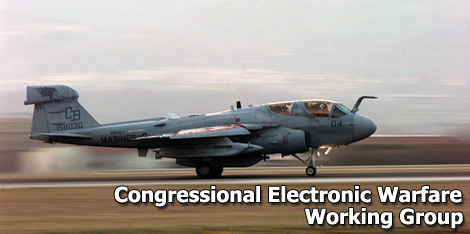
EW Plays an Important Role in Keeping our Servicemembers Safe
Larsen Electronic Warfare amendment
The legislation also includes an amendment, authored by Larsen, which requires the Department of Defense (DOD) to submit an annual report outlining its electronic warfare (EW) strategy and report to Congress on the EW capabilities are being used to achieve that strategy and how the military is providing leadership on EW issues.
"As a Member of the House Armed Services Committee, I first became involved in this critical part of our national defense because Naval Air Station Whidbey Island in my district is a leader in electronic warfare. Our Prowlers and Growlers, airborne electronic attack aircraft based on Whidbey Island, protect airborne assets and support our troops on the ground. Across the Armed Services, NAS Whidbey Island is the brain trust for electronic warfare expertise."
Electronic Warfare describes our military's use of radio frequencies to deploy weapons and protect our troops, and to deny our enemies the use of radio frequencies to attack us. Weapons that depend on radio frequencies range from the simple to the sophisticated. They include air defense radars which help enemies identify and destroy U.S. planes, and improvised explosive devises (IEDs) which have caused significant U.S. casualties in Iraq and Afghanistan.
"Electronic warfare plays a more important role than ever in keeping the men and women in our military safe," Larsen continued. "That is why the Department of Defense needs a comprehensive and unified strategy across the Armed Services to control the electromagnetic spectrum, and Congress needs to know what that strategy is."
The legislation also includes an amendment, authored by Larsen, which requires the Department of Defense (DOD) to submit an annual report outlining its electronic warfare (EW) strategy and report to Congress on the EW capabilities are being used to achieve that strategy and how the military is providing leadership on EW issues.
"As a Member of the House Armed Services Committee, I first became involved in this critical part of our national defense because Naval Air Station Whidbey Island in my district is a leader in electronic warfare. Our Prowlers and Growlers, airborne electronic attack aircraft based on Whidbey Island, protect airborne assets and support our troops on the ground. Across the Armed Services, NAS Whidbey Island is the brain trust for electronic warfare expertise."
Electronic Warfare describes our military's use of radio frequencies to deploy weapons and protect our troops, and to deny our enemies the use of radio frequencies to attack us. Weapons that depend on radio frequencies range from the simple to the sophisticated. They include air defense radars which help enemies identify and destroy U.S. planes, and improvised explosive devises (IEDs) which have caused significant U.S. casualties in Iraq and Afghanistan.
"Electronic warfare plays a more important role than ever in keeping the men and women in our military safe," Larsen continued. "That is why the Department of Defense needs a comprehensive and unified strategy across the Armed Services to control the electromagnetic spectrum, and Congress needs to know what that strategy is."
Tuesday, December 7, 2010
Three Great Apes
The three major warfare communities lord over the Navy like great apes, demanding loyalty and hoarding power. Only by overhauling the personnel system can we reduce their power and get everyone back in service of the Navy itself.
These warrior apes have admirable strengths: expertise in their craft, professionalism in their role, and huge devotion to their kind. But they also do the Navy harm: their internal interests overwhelm the Navy's broader interests, their single-mindedness impedes the Navy's larger mission, and their internal focus breeds loyalty that causes a profound under-imagination of the Navy's potential future.
Our officer personnel system is failing the Navy mission in many ways:
- The parochial interests of the warfare communities are the primary drivers and major organizing theme of officer management, slighting higher level needs that have their foundation in the Navy mission.
- The Navy doesn't own its own people. The warfare communities do and control them absolutely.
- The primary rationale behind officer assignments—the sacred Triad of Detailing—contains a gigantic flaw.
- The mechanics of assignment transactions are poorly managed.
- Tour lengths are much too short for good efficiency.
- Up-or-out officer management is horribly wasteful.
Let's tackle these personnel problems by starting with a single, unarguable premise: the officers of the Navy exist to serve the Navy. Not themselves. Not their particular kind of warrior ape. The Navy.
Monday, December 6, 2010
Ideas - don't be afraid to share yours
TED (owned by The Sapling Foundation) fosters the spread of great ideas. It aims to provide a platform for the world's smartest thinkers, greatest visionaries and most-inspiring teachers, so that millions of people can gain a better understanding of the biggest issues faced by the world, and a desire to help create a better future. Core to this goal is a belief that there is no greater force for changing the world than a powerful idea. Consider:
- An idea can be created out of nothing except an inspired imagination.
- An idea weighs nothing.
- It can be transferred across the world at the speed of light for virtually zero cost.
- And yet an idea, when received by a prepared mind, can have extraordinary impact.
- It can reshape that mind's view of the world.
- It can dramatically alter the behavior of the mind's owner.
- It can cause the mind to pass on the idea to others.
OUR COLLABORATION ACROSS
THE
INFORMATION DOMINANCE CORPS
IS CAPABLE OF CHANGING THE MANNER IN WHICH
THE NAVY CONDUCTS COMBAT AT SEA
AND PREVENTS WAR.
OPNAV N2/N6 is actively seeking your ideas. SHARE THEM. Create a better future. It's where you'll spend the rest of your life.
Sunday, December 5, 2010
Skipper in the spotlight
Captain Charles Brian Johnston, a native of Brocton, NY, is the Commanding Officer of Navy Information Operations Command (NIOC), Norfolk.
Graduating from the Pennsylvania State University in 1983 with a Bachelor of Science Degree in Aerospace Engineering, Captain Johnston received his commission as an officer in the U.S. Navy and was designated as a Cryptologic Officer (1610). He subsequently graduated from the Defense Language Institute (Russian language) and was assigned as the Operations Officer at the U.S. Naval Security Group Activity at Hellenikon Air Force Base in Athens, Greece. He qualified as a Special Evaluator aboard EP-3 aircraft and accumulated over 800 flight hours in numerous operational missions throughout the Mediterranean. He also led operational deployment teams aboard the USS KING (DDG 41) and USS WAINWRIGHT (CG 28).
Captain Johnston graduated from the U.S. Naval Postgraduate School with a Masters Degree in Systems Technology (Space Systems Operations) in 1990. He subsequently reported to the U.S. Naval Research Laboratory as the Director of the Mission Support Facility for the CLASSIC WIZARD program. In 1995, he was assigned to lead over 200 personnel at the U.S. Naval Security Group Detachment in Diego Garcia. He then received orders to the Chief of Naval Operations, Space, Communications and Electronic Warfare, Washington, DC, as an officer in the Tactical Exploitation of National Capabilities (TENCAP) office.
Captain Johnston received orders to the U.S. Fifth Fleet in Bahrain in 1998, where he served as the collections manager in the intelligence department. He was then assigned to the Commander of the U.S. Pacific Command at Camp Smith, HI, where he led the branch responsible for intelligence collection and information operations support. In 2002, he transferred to the Naval Information Warfare Activity at Fort George G. Meade, MD. There he served as the Technology Department Head as well as technology lead for the U.S. Naval Security Group Command. After being promoted to Captain, he was assigned as a special assistant to the Director of Communication Networks (N6) on the staff of the Chief of Naval Operations.
Captain Johnston graduated from the National War College with a Masters Degree in National Security Strategy in June 2008. His decorations include Legion of Merit, Defense Meritorious Service Medal, two Meritorious Service Medals, and numerous other personal, combat, unit, and campaign awards. Captain Johnston assumed command of NIOC Norfolk 22 April 2010.
Graduating from the Pennsylvania State University in 1983 with a Bachelor of Science Degree in Aerospace Engineering, Captain Johnston received his commission as an officer in the U.S. Navy and was designated as a Cryptologic Officer (1610). He subsequently graduated from the Defense Language Institute (Russian language) and was assigned as the Operations Officer at the U.S. Naval Security Group Activity at Hellenikon Air Force Base in Athens, Greece. He qualified as a Special Evaluator aboard EP-3 aircraft and accumulated over 800 flight hours in numerous operational missions throughout the Mediterranean. He also led operational deployment teams aboard the USS KING (DDG 41) and USS WAINWRIGHT (CG 28).
Captain Johnston graduated from the U.S. Naval Postgraduate School with a Masters Degree in Systems Technology (Space Systems Operations) in 1990. He subsequently reported to the U.S. Naval Research Laboratory as the Director of the Mission Support Facility for the CLASSIC WIZARD program. In 1995, he was assigned to lead over 200 personnel at the U.S. Naval Security Group Detachment in Diego Garcia. He then received orders to the Chief of Naval Operations, Space, Communications and Electronic Warfare, Washington, DC, as an officer in the Tactical Exploitation of National Capabilities (TENCAP) office.
Captain Johnston received orders to the U.S. Fifth Fleet in Bahrain in 1998, where he served as the collections manager in the intelligence department. He was then assigned to the Commander of the U.S. Pacific Command at Camp Smith, HI, where he led the branch responsible for intelligence collection and information operations support. In 2002, he transferred to the Naval Information Warfare Activity at Fort George G. Meade, MD. There he served as the Technology Department Head as well as technology lead for the U.S. Naval Security Group Command. After being promoted to Captain, he was assigned as a special assistant to the Director of Communication Networks (N6) on the staff of the Chief of Naval Operations.
Captain Johnston graduated from the National War College with a Masters Degree in National Security Strategy in June 2008. His decorations include Legion of Merit, Defense Meritorious Service Medal, two Meritorious Service Medals, and numerous other personal, combat, unit, and campaign awards. Captain Johnston assumed command of NIOC Norfolk 22 April 2010.
Saturday, December 4, 2010
12th Anniversary of my failure to screen for command - while in command !!
As a Lieutenant Commander, I assumed command of Naval Security Group Activity Yokosuka, Japan (a Commander command) in January 1997 from LCDR Eric Newhouse (the interim CO). The CO previous to Eric had been relieved 6 months earlier, after failing two successive Inspector General inspections - leaving behind demoralized Sailors and a fractured command.
The "Failure to Screen for Command" letter arrived after I had been in command for 23 months and a few days before I put on Commander. Twelve years later, it still leaves a bitter taste in my mouth - as you can tell.
I was not completely surprised by the letter because a Lieutenant from BUPERS had called two weeks earlier to inform me that I had "FAILED TO SCREEN FOR COMMAND". What did surprise me was the fact that I had failed to screen for command - a job that I had held for two years, already.
Thankfully, I didn't lose my day job. I post this letter for those who have had to deal with the pain of "Failure of Selection" - whether it be for promotion, command or some other program you desperately want. It's a very painful and emotional thing. One which we try very hard to comprehend. No one ever explained how I failed to screen for a job I already had and was ranked #1 at. A year later, I "successfully screened" for the assignment that I had been doing for 35 months.
Friday, December 3, 2010
POM12 Priorities reflect importance of Information Dominance, FLEETCYBERCOM and 10th Fleet
Navy Priorities
- Balanced Navy Program that wins our Nation's wars and deters future conflicts
- Shipbuilding and Aviation Plans
- Information Dominance and FLEETCYBERCOM/10th Fleet
- Quality of life / quality of service for Sailors
- Current operations and platform maintenance readiness
- Total Ownership Cost Reduction
- Energy Efficiency
Thursday, December 2, 2010
The Bedrock of Military Success
American officers are the bedrock of military success. They face a whirlwind of change that is picking up speed, yet their preparation is dictated by a system based on stability and predictability that, if they ever existed, certainly do not exist today. Others have identified many of the same problems and have offered some of the same solutions, explored in much greater depth than we were able to accomplish here. Yet strikingly few changes have been made. This reluctance—primarily cultural and institutional—cannot persist. Failing to adapt the officer management system to better align with the future will put U.S. officers at a growing disadvantage, placing more and more of a burden upon them as individuals to overcome a bureaucracy that ideally would be dedicated to supporting their success. The ingenuity gap is real and growing, and our officers are caught in it. DOD should immediately implement changes to officer management to close this gap.
From "The Ingenuity Gap"
Wednesday, December 1, 2010
Electronic Warfare SAVES Lives
“We have learned time and time again that EW saves lives. We need to develop the right technology; train our troops to use the capability; field the capability quickly; operate jointly; and stay ahead of the curve. I know from my time as an electronic warfare officer in the Air Force how important EW capabilities are to our troops. And our Armed Forces use the electromagnetic spectrum now more than ever. The Electronic Warfare Working Group aims to strengthen EW capabilities and assets to maintain the highest level of military readiness today and into the future, and this amendment will help in that effort.
“To stay ahead of the curve, we need a plan. We need a strategy. And Congress needs to know and understand how the Defense Department is ensuring the future of our EW capability. I applaud the Armed Services Committee for accepting this amendment. It will lead to a strategic advantage for our troops in the field.”
Congressman Joe Pitts
(R-PA)
Subscribe to:
Posts (Atom)