Wednesday, May 16, 2018

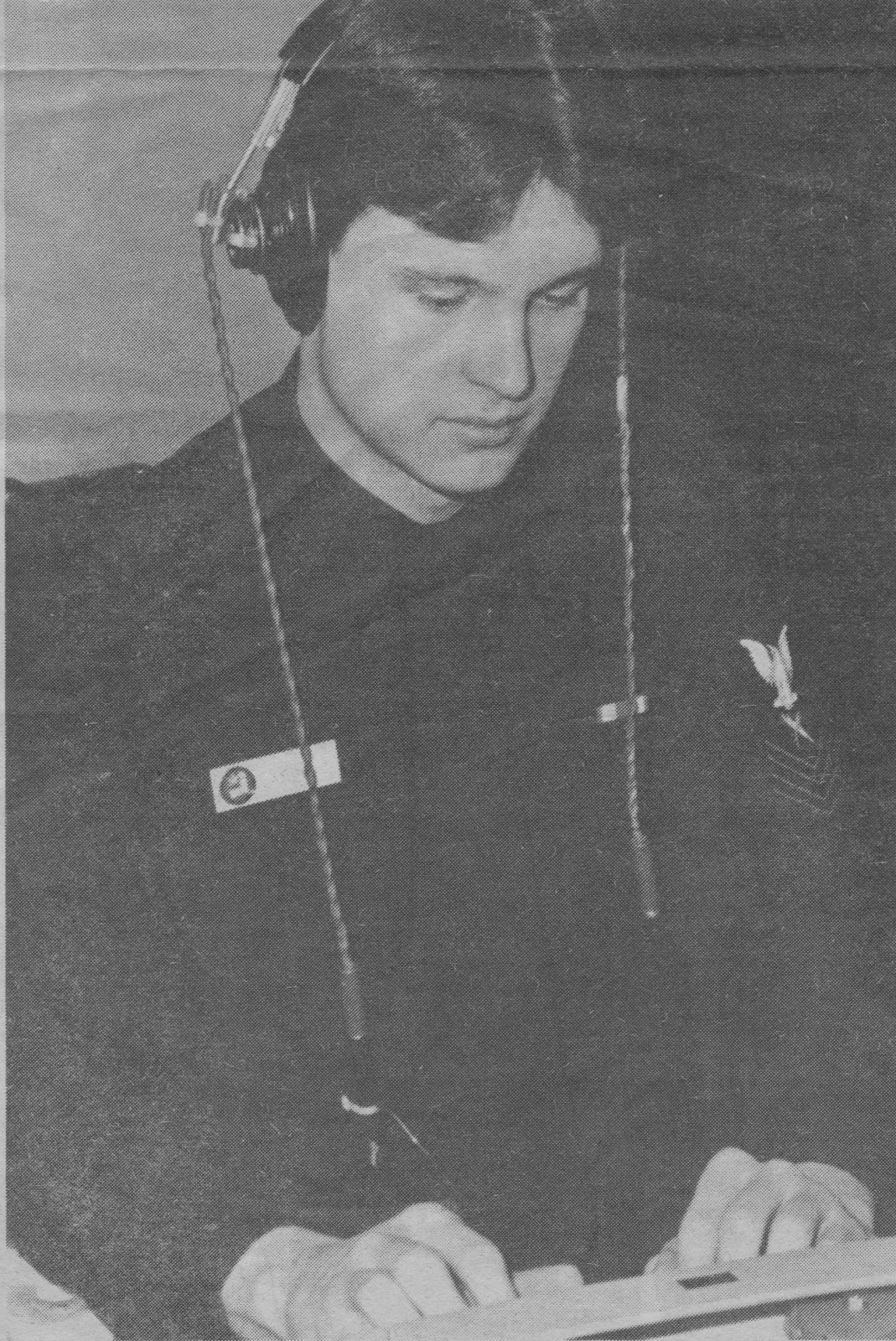
Remembering Steven Daughtery

We have a duty to remember - 11 years ago today

CTT1 (SW) Steven Daugherty was born on 16 May 1979 in Apple Valley. No one thought he would leave this earth before he was 30, 40, 50 or even 60 years old. But, the young man is gone. Gone, but not forgotten. No. Not by a long shot.

He was from Barstow, California and really never intended to join the Navy. He was a student in my schoolhouse at the Naval Center for Cryptology at Corry Station, Pensacola. We had about 8000 students graduate in a year. So, I can't say that I even recall who he was. That won't keep me from remembering him.

After his time at Corry, he served in the typical billets of our young Petty Officers. He went to sea and advanced reasonably quickly. While at Navy Information Operations Command Norfolk he became interested in the SEALs and qualified to deploy to a U.S. Navy SEAL team operating in Iraq. He advanced to Petty Officer First Class (E-6) at a pretty good pace.

On 6 July 2007 (my daughter's birthday) he was killed in Iraq by an improvised explosive device (IED).

We can argue about whether Steven Daugherty was a hero or not. We can't argue about his patriotism. There is no doubting that.

Obituary:  CTT1 (SW) Steven Phillip Daugherty, USN, 28, passed away July 6, 2007, on duty in Baghdad, Iraq. He was born May 16, 1979, in Apple Valley. Besides his love for the Navy, he enjoyed playing his guitar and spending time with family and friends. He is survived by his parents, Thomas and Lydia Daugherty of Barstow; a son, Steven P. Daugherty Jr. of Tacoma, Washington; two brothers, Robert Daugherty of Omaha, Nebraska, and Richard Daugherty of Colorado Springs, Colorado; a sister, Kristine Daugherty of Killeen, Texas; and his grandmother, Pearl Watkins of Yermo. A graveside service with full military honors was conducted in Arlington National Cemetery Tuesday, July 24, 2007, at 10 a.m.

Friday, May 4, 2018

18 Years Ago - From the Archives: Long letter to my Junior Officers as I departed command in June 2000

In August of 1982, after Officer Candidate School and SERE/DWEST school and some leave, I reported to NSGD Atsugi to face my first division in the Navy and the Naval Security Group as a brand new Ensign. Damn, I was excited and nervous, eager and unsure. Looking back on those early days of my Navy life as a commissioned officer, I have asked myself, from my perspective as your outgoing Commanding Officer, what might be of interest to each of you – my first junior officers.

The word “purposeful” kept coming back to me, and it occurred to me that you, as naval officers (first, and cryptologists second) for the next generation, are more important now than perhaps at any other time in our brief Naval Security Group history. The United States Navy is the only true over-the-horizon worldwide deployable force in the world, and RADM Whiton has re-invented cryptology for a Navy-Marine Corps Team which has the most visible forward presence on the world stage and certainly here in Yokosuka, Japan - forward deployed with the Navy's SEVENTH Fleet.

My friend and former boss, CDR Jack Dempsey used to keep a flight journal back in the 80’s while we were flying with Fleet Air Reconnaissance Squadron ONE (VQ-1) in which he started each page with a borrowed quote from Charles Dickens’ A TALE OF TWO CITIES. Each page started with - “These are the best of times, these are the worst of times…” Can we have it both ways? You are fortunate at the command to have some of the very best and brightest Sailors in the Naval Security Group. You have a chance to lead the entire claimancy in all areas of cryptology if you choose to do it. It won’t happen by accident. You have to make it happen. That’s your job.

You guys (and gals – with LTjg Kim and ENS Sabedra here) will lead our Sailors at this turning point in our claimancy’s history. And so I want to you to know just how “purposeful” and important I believe you are, and second, what I believe each of you has got to do at a very personal level to seize what could be the best of times in our community’s history and then you can start your own journal with…”these are the best of times….”

From day one, you are not only division officers and sometimes Department Heads, but you are ambassadors for the Navy’s Core Values, the CNO’s 4 Stars of Equal Magnitude and the cryptologic community’s Strategic Plan (Maritime Cryptologic Architecture, the Maritime Concept, etc). PASS THE WORD. I genuinely believe your involvement is critical to RADM H. Winsor Whiton’s and RADM Joseph D. Burns’ plans that will carry the community through most of your careers (if you choose to have one in the Navy). The Sailors and Chiefs you will help lead will be more “purposeful” - and far more challenged - than ever before. As a result, your genuine leadership will be more “purposeful” and more valuable than ever before. You are the ones who will have to deliver U.S. Naval Security Group Yokosuka’s promise of “Quality Cryptologic Integration For The Fleet” on a daily basis.

If you do not think you are more “purposeful” and important than at any other time in our community’s history… think again. SECGRU’s vital leadership today is reflected by the leadership positions cryptologists hold throughout the Department of Defense – Captain Rich Wilhelm (a former 1610) served in the Vice President’s office as recently as 5 years ago, many are serving on the Staff of the Secretary of Defense and on the Joint Staff in key positions while others are serving the SECNAV directly. We live in a world of global communications, connected economies, and instantaneous video coverage of world and local events. The result often means that a decision made by you - while running a SSES on BLUE RIDGE, leading a team on JOHN S. MCCAIN or CURTIS WILBUR , or simply running your division here at the command - could have immediate and substantial impact on the Sailors under your charge and …perhaps…even world events. Your leadership must be “purposeful”, and you bear a tremendous responsibility. You have to CHOOSE to make a difference. It is a choice. It is your choice. Do something or do nothing – you decide. Don’t let things happen by accident – MAKE THINGS HAPPEN.

A famous Admiral whose name escapes me at the moment said “there is… no career in the world that encompasses the daily physical and mental demands of that of one in a nation’s Navy.” I would argue further that only unrelenting loyalty, as demonstrated by many in the Navy provides the necessary foundation to lead effectively. There are some officers, Chiefs and Sailors that would have us believe the opposite… that loyalty is a dying characteristic in this Navy. I say that the loyalty we value so much is more “purposeful” than ever, as an asset for and example to the American public we are sworn to protect.

As the value of your loyalty and leadership is being debated around you, I urge you to pay attention to and join in the debate. Retired CDR Mike Loescher wrote in a USNI PROCEEDINGS magazine article that the Naval Security Group was broken. RADM H. Winsor Whiton responded that, “ NSG isn’t broken and that this an exciting time to be a cryptologist”. I share the Admiral’s view. I’m excited. Certainly, we all have to guard against mediocrity and against attacks on our time-tested core values and against other charges that diminish our effectiveness. I sought to bring positive changes for this command. You’ve all been helpful in that respect. I thank you for that. Our team effort earned the command recognition through the award of a meritorious unit commendation. That doesn’t happen every day.

As I emphasize that your leadership is more “purposeful” than ever. Let me turn now to what I believe you must do, individually, to bring effectiveness to your leadership skills, as you chart a new course for the command with CDR Sean Filipowski in the new millennium and one of the few great turning points in our claimancy’s history. Because you will be so “purposeful” to our community’s future, I believe you must go beyond the bedrock fundamentals of leadership.

Some of you have heard me drone on and on about Traits of Leadership which date back two thousand years… ((They are in every book on Naval Leadership – this is not new stuff.)) I’ve given each of you the basic library of Naval leadership books. Take the time to read them. There’s good stuff in there.

A leader is trusted, a leader takes the initiative, a leader uses good judgment, a leader speaks with authority, a leader strengthens others, is optimistic and enthusiastic, never compromises absolutes, and leads by example. Lots of great Covey “Seven Habits” in there. We’ve covered all that before, haven’t we? You HAVE to take that stuff onboard and make it a part of your daily life.

I believe you should adhere to these timeless traits of leadership. But today, I believe you must also apply something more… you must apply adapted traits of leadership… that is, techniques appropriate to your particular style and situation. You can achieve it only one way… by staying connected to the Sailors and Chiefs you are entrusted to lead.

It is time for each of you to do a tactical and strategic level re-focus to adapt and apply your own leadership styles appropriate to the times. In short, you will have to build upon the bedrock fundamentals of leadership. You must have a solid foundation if you plan to put anything on top of it. I tried to give you the tools to establish a solid foundation.

The best leaders in our Navy have always found ways to build upon the basic foundations of their leadership skills. Because each of you is so important to the future of our community, I also urge you to invest some time and effort in looking for answers within yourselves, to a question that is being asked more frequently today. “Are we losing the Navy spirit?” Some believe that because our Sailors so rarely actually go into harm’s way… that because technology is removing them from the actual battlefield, on a physical level we will lose the guts to fight effectively when the time comes. Some have suggested that we don’t even have the strength of character we once had. I don’t believe that.

The Navy spirit is not only physical courage at sea…courage that must be present in the face of physical danger. That is important, and that deserves our full attention. But the Navy spirit is also the ability to cope with the stresses involved with day-to-day leadership of our Sailors and Chiefs.

Hardship, stress and fear…exist for a Sailor whose ship, while far at sea on seemingly calm waters, can face an incoming missile attack during a long-range engagement. Technology will not change that fact much. We must address how we can develop the Navy spirit within our Sailors in all scenarios.

When I worked for Admiral Whiton in the Comptroller’s office (he was a Captain then), he kept a placard on his wall with the mission of the Navy as defined in Navy Regulations, Chapter Two. It said simply: “The Navy… shall be organized, trained and equipped primarily for prompt and sustained combat incident to operations at sea.” Every one of us needs to understand the mission of the Navy in its most basic form.

How can you instill the Navy spirit and genuine understanding of the Navy’s mission in the Sailors and Chiefs you are charged to lead? The Navy has invested a great deal of time and money preparing you. They will invest a great deal more. It is time to do your part, for it is how you return the Navy’s investment that will bring it value; that value is limitless, but it depends on you. GET BUSY!

I challenge each of you to search within yourselves for ways now, to build upon the framework of leadership you are learning … and develop a strong support structure that will serve you and those you lead when you are asked to go do the Navy’s business – however mundane it might seem at any given moment. I am talking about a very personal structure of character that is most appropriately developed through experience. 25 years of experience takes nearly 25 years to get - there are no F*ing shortcuts. Make the most of every experience you have. When character is involved – promise me this – you will always go the long way and never take shortcuts. There aren’t any. Trust me, I would have found them in my exhausting search for them over the past 25 years. Where character is concerned, I have always tried to go the long way. It’s a much better trip. Take my word for it.

The real challenge for each of you, however, is that the Navy may not give you the luxury of time and experience to build your foundation. When you walk across your own ship’s brow PCS for the first time (Paul Lashmet on ESSEX; Andy Reeves on FIFE so far), you may be called upon to lead decisively that very day. Your skills as a Naval officer will be put to the test from the very start – your skills as a cryptologist on that ship may never be tested. BE A NAVAL OFFICER FIRST AND FOREMOST – that’s what you are! The cryptologic stuff is secondary and it will remain so. Remember Admiral Whiton’s brief – "we do cryptology because we have a Navy – not we have a Navy to do cryptology.”

Truly great leaders in history did not sit idly by and wait for experience to find them. They aggressively sought to build their own personal foundations of character, on a daily basis. Colonel Teddy Roosevelt , General Colin Powell and LT John F. Kennedy knew that their chosen military and political lives would present them with immediate and unrelenting challenges – all certainly more daunting than anything we have yet faced. They knew their “crowded hour,” could arrive at any moment. That is one reason they all worked to build their physical abilities to match their intellectual capabilities. Somehow, I knew that the Navy’s PRT program had some relevance in here somewhere. Physical fitness is important also. But it’s only part of the overall picture of a Naval Officer.

The leadership, the spirit and the strength of character displayed by Colonel Roosevelt, General Powell and President Kennedy were more products of their own pursuits, above and beyond the framework they had been given. As a result, they were “purposeful” to their time and are revered in history. Who can say today what your legacy will be? I will just tell you that you are working on it now. DON’T MESS IT UP.

All of them led their Sailors and soldiers from the heart, and had something more, crafted from the environment around them… the character of a man like Admiral Arleigh Albert Burke… the strategic vision of Admiral Chester Nimitz in the heat of a tactical nightmare… the innovation of Admiral Elmo Zumwalt with his phenomenal understanding of race relations and Admiral Hyman Rickover’s creation of the submarine force… the dynamic leadership of great Marines like General Lejeune and more recently General Krulak and a personal hero of mine from USS Blue Ridge – Colonel Bill Wesley. What will you do, not just to be “purposeful”, but to be enthusiastically followed during the personal challenges that will surely come for each of you, in these, the best of times in the history of our claimancy?

When I faced my first division at NSGD Atsugi in 1982 and in every assignment since including U.S. NSGA Yokosuka, I found, as you will, the Sailors and Chiefs returned the same level of loyalty and dedication to me that I devoted to them. More important, it is abundantly clear and readily apparent to the most casual observer that Sailors and Chiefs will quickly look past the veneer of your lineage (some of them went to better colleges than we all did and all of you went to a better college than I did) and the gold or silver (and blue) bars (and oak leafs) on your collar. Our Sailors and Chiefs have a unique ability to see past all that, and perceive the foundation you are building. They will know when you are on rocky ground. They will sense the weakness in you. They will perceive your character and all its inherent defects. Some great man once said, “The true character of a Naval officer cannot be hidden from his/her Sailors.” There is no place to hide. Lead, follow or GET THE HELL OUT OF THE WAY. Again – you get to decide.

If they find your character to be strong and true, they will go the extra mile for you. If they find you to be weak, prepare for the worst – it is bound to come. We’ve all seen it in its ugliest forms. At this period in our claimancy’s history, when our Sailors and Chiefs are so essential to our mission, there is no greater test of your mettle as a Naval officer, than leading Sailors and Chiefs who can count on your loyalty and your character. Be true to them. They will be true to you.

I am confident you will seize these days, whether or not they personally are for you …”the best of times or the worst of times”, to carry-on what we have started together at U.S. Naval Security Group Activity Yokosuka and develop your own personal foundations of character that will serve you well during the challenges each of you can surely expect in your own future.

Thanks for helping me get the command to where it is today. You all played a big part in that. You have been part of something very important and special to our community. You built a command from the ground up. That’s something you can really be proud of. I certainly am.

Thursday, May 3, 2018

The importance of writing in the Navy profession

Any casual reader of my blog knows how I feel about the value of reading and, more importantly, writing.  Over the 2017 calendar year, I made time to send over 800 pieces of personal correspondence to a number of civilian government officials, senior Navy leadership, many of our NAVIOCOM Commanding Officers, Shipmates and many other people of consequence in my life. Writing is very important to me.  Relationships are very important to me.  Successfully putting those two things together has always been a source of personal satisfaction for me.  (Lots of "I" and "me" in this post - sorry about that).

I was taught early in my Navy career that "answering the mail" was an essential element of an officer's responsibility and an expression of his/her social/professional 'breeding'.  Fortunately, my Mother was a prolific letter writer and she taught me well.  I cannot fail to mention that my sister helped immensely with my penmanship lessons.

The responses (and non-responses) to my correspondence over the past year have been instructive for me.  I often hear some variation of the following (excuses):
  • Hey, I got your letter and meant to answer it.
  • Oh yeah, I need to do a better job of keeping up with the mail.
  • You just don't know how busy it is on the staff here.  I barely have time to eat my lunch.
  • I'm just not a good letter writer. My penmanship is horrible.
  • I can never find the right paper to write on.
  • I wish I had more time in the day to write like you do.
  • I've been meaning to write.  I'll give you a call.
  • You have no idea what my schedule is like; I don't have a minute for myself. Busy, busy, busy.
I was heartened to learn recently that the United States Navy recognizes the value of personal and professional correspondence and provides instruction through the COMMANDANT OF MIDSHIPMEN INSTRUCTION 1520.4B.  The subject is OFFICER PROFESSIONALISM AND CIVILITY TRAINING PROGRAM which addresses some of the following areas (relevant to my discussion here):

c. Stationery.
   (1) Social and military correspondence (Examples displayed during seminars).
    (2) Stationery specifics.
         (a) Calling Card.
              1. Correct size and correct information on card.
              2. Various ways of using calling card.
         (b) Personal Card vs. Business Card.
              1. Correct size and correct information on card.
              2. Correct use.
         (c) Stationery Use.
              1. Writing paper.
              2. Thank you notes.
              3. Condolence notes.
              4. Use of ink fountain pens.
          (d) The personal signature in life.


So, I have resolved to continue to work on combining writing and relationships in 2018.  Some of you will continue to hear from me.  And others, well...I will continue my onslaught of filling your inbox in hopes that one day you will pick up a pen and put it to paper.

Monday, April 2, 2018

Our Navy Mistress

Our Navy is a fickle mistress.  She will never love any of us as much as we have loved her.

Tuesday, March 27, 2018

Letter writing etiquette

For some of my naval officer contemporaries.  I don't know why you didn't learn this at the USNA, in your NROTC program or at officer candidate school.


As a rule, every letter, unless insulting in its character, requires an answer. To neglect to answer a letter, when written to, is as uncivil as to neglect to reply when spoken to. In the reply, acknowledge first the receipt of the letter, mentioning its date, and afterwards consider all the points requiring attention. From @artofmanliness

Monday, March 26, 2018

Wardroom meetings

Do these happen ashore any more?  What do you talk about?  What leadership challenges are you discussing?  What leadership guidance is your Command Officer and Executive Officer providing?

Command Excellence - The Wardroom

Navy Cyber Warfare Development Group CTF 1090, for example - 


The wardroom at Navy Cyber Warfare Development Group:
•    Is Cohesive
•    Matches CO-XO Leadership
•    Raises Concerns with CO and XO
•    Takes Initiative
•    Does Detailed Planning
•    Takes Responsibility for Work-Group Performance

The wardroom is the interface between the senior officers of the command, who make the policy, and the senior enlisted, who carry out the tasks of the command. The wardroom is responsible for developing and imple- menting plans that achieve the goals set by the CO and XO. In top commands, the department heads and division officers make sure these plans are specific, deciding who is to do what, when, and how. They gather information from chiefs and other relevant sources, and are careful to coordinate their department's or division's activities with other work going on.

This means that the wardroom must work as a team with the CO and XO. In superior commands there is more congruence between the wardroom and the CO-XO on command    philosophy    and leadership style than in average commands. Everyone is headed in the same direction. They identify with the goals set by the CO and XO and with how the CO and XO wish to accomplish them.

Officers of superior commands take initiative in several ways. They try to find new and better ways to do their jobs, and when they see that something needs to be done, they do it without waiting to be told. They are often willing to do more than they are required to do in order to achieve the command's mission. And they readily ask for guidance or information from the CO or XO if they believe these are necessary to accomplish their jobs or to develop themselves professionally. They also raise command issues with senior officers before those issues turn into serious problems.

One of the greatest strengths of wardrooms of superior commands is their sense of responsibility for the performance of their subordinates. This leads them to try to anticipate problems before they occur, to take responsi- bility when a problem does occur that they should have prevented, and to hold their personnel accountable for meeting the command's standards. There is a strong sense of ownership and pride.

Finally, superior wardrooms support division officers, who, although they outrank enlisted personnel, are among the youngest people in a command and are relatively inexperienced when it comes to hands-on technical knowledge and management know how. Thus, department heads must do their own jobs and also attend to the needs of their junior officers.

FOR MORE ON COMMAND EXCELLENCE, GO HERE.

Thursday, February 15, 2018

Professionalism of our cryptologic force


The professionalism of our force is built upon mastery of a core set of skills that every cryptologic professional must possess. It all starts with a deep understanding of the fundamentals of cryptology, and a requirement that our professionals think clearly, and convey their analysis and assessments just as clearly to our Navy and our nation's decision-makers.

Monday, February 5, 2018

Unhappy Sailors

Unhappy Sailors can be the Navy's greatest source of learning.  What are your unhappy Sailors telling you?  Are you listening?

Saturday, January 27, 2018

A call for a more honest service


Turns out that the Navy is not the only service lying to itself.  You can read about the Army experience HERE.

Thank you www.thestrategybridge.org

Thursday, January 18, 2018

The Captain carried them all

For him, there was no fixed watch, no time set aside when he was free to relax and, if he could, to sleep. He was strong, calm, uncomplaining, and wonderfully dependable. That was the sort of captain to have.

- Nicholas Monsaratt, "The Cruel Sea"

Thursday, January 4, 2018

Monday, December 11, 2017

Smartest person in the room? Not by a long shot.


I met with a small group of IDC officers some years back and one of my fellow Captains wanted to make sure all of us understood he was the smartest guy in the room.  It wasn't a declarative verbal statement. But, you readily understood his intent. He professed his sincere apologies for arriving late to our meeting.  It wasn't long before he made it known that his schedule was way overbooked and he really didn't even have time for the meeting we were currently involved in and he would have to depart early.  Thank goodness one of his Sailors brought him his coffee and he had time to take a few sips before he jaunted off for his next meeting for which he was already late.  Good thing he was a Captain and those 40 Sailors didn't mind waiting.  Quite the busy man.

He wasn't the smartest person in the room, nor was he even the smartest man in the room.  Self importance is not a virtue in most environments requiring servant leadership.

Friday, December 1, 2017

Crosspost from Proceedings Magazine

www.usni.org - Become a member

From the Deckplates - A Mistake Should Not Kill a Sailor's Career
  

Mistakes Happen 

Before enlisting in the Navy, I was in college working toward a bachelor’s degree in business. I had no idea what I wanted to do with my life, but what I didn’t want to do was graduate college with no career goals and a load of debt. So I joined the Navy. 
I was the first in my family to join the military, and I taught my family the importance of military service. I scored high on the Armed Services Vocational Aptitude Battery test and signed a contract to be a linguist specializing in modern standard Arabic. I breezed through boot camp and found myself at the Defense Language Institute in Monterey, California. Life was easy, and I was doing well in school. I had friends, and we spent all week studying our languages and most weekends together drinking and blowing off steam. I was getting good grades, volunteering, and had all my required duty qualifications. What could go wrong? 
Life went on like this for about six months. The night that forever altered my career started when a couple of my shipmates came back late for curfew. They were returning from a party I had attended, and it was discovered there had been drinking. The command led a monthlong investigation until every person who had attended the party was identified. Every one of us was sent to a disciplinary review board. 
Suddenly, I went from being an asset to the Navy to being expendable. I was told the Navy didn’t need me, the Navy couldn’t trust me, and that I would be lucky if I were allowed to stay in the Navy. I went to captain’s mast. My departmental leaders assured me they would vouch for me. Unfortunately, my captain let no one speak on my behalf. This led to me being awarded every nonjudicial punishment (NJP) except administrative separation. I lost half a month’s pay for two months and was demoted, put on restriction, given extra military instruction, and kicked out of school. In addition, the entire command was required to witness the captain’s mast at 0400. 

Life after NJP 

Life after NJP was terrible. No one would look at me or speak to me, and everything I had worked for was taken. I served 30 of my 45 days of restriction before receiving new orders and leaving the command. I was sent to the USS  America (LHA-6) as an undesignated Sailor. 
Being an undesignated Sailor was demoralizing. I hadn’t been in the Navy long enough to use tuition assistance to go to school; I had no advancement to study for; and I was surrounded by negativity. I worked with Sailors who had been undesignated for years, trying and failing to get picked up for a rating. I spent weeks on end working from sun up to sun down, and for what? I was told I wasn’t going to get a real job because of my record and that I should take whatever the Navy gave me. Day after day, the reasons to give up expanded. 

Overcoming Adversity 

I finally realized that if I wanted my life to change, I would have to change. From then on, I picked up collateral duties, started pushing to acquire more qualifications, and went after my enlisted surface warfare pin. 
Although these new goals changed my attitude, I still had to learn how to ignore the negative words from those around me. When I had been on my ship for a year, it was time to apply for a job. I decided to try for information systems technician, understanding that I was unlikely to get the job because of my record. As I waited for the results, I continued working toward my goals, and a month later I earned my surface warfare qualification. I was the first sailor in my department to get pinned. The day I got pinned also was the day I found out I had been picked for the information systems technician job. I cried tears of joy when I learned I would be getting new orders and leaving behind my past. 
Over the next three months, I earned my enlisted air warfare pin as well as my enlisted information dominance pin. Yet, again I was told it would be impossible to get what I wanted. I was even told that leaving with three pins would “hurt the integrity of the program” because I was only a seaman. I was determined, however. I earned my third pin the same day I departed the ship. I was the first seaman on the ship to earn the enlisted information warfare pin, and the first sailor on the ship to complete all three warfare programs. 

Invest in Sailors 

Over the past three years I have seen an incredible gap in leadership. Sailors of all ranks and rates have made mistakes and been knocked down, yet more senior Sailors show no compassion for junior Sailors in these situations. Putting down our Sailors after they get into trouble, questioning their character, and stripping them of opportunities sets them up for further failures and tells them that the Navy will not take care of them. How can we trust these Sailors to fight for the Navy and defend their ship if they don’t believe the Navy will fight for them? If we want our Sailors to look out for each other and us in both good times and bad, then we, as leaders, must do the same and fight for them. 
The Navy should offer training to Sailors who are awarded NJP and counseling on how they can turn their careers around. These Sailors need to hear from other Sailors who have been in trouble that it is possible to overcome those obstacles. They need support, leadership, and guidance. NJP is the punishment; there is no reason the rest of their careers also should feel like a punishment. Right after NJP is our greatest opportunity to provide guidance and care to our Sailors. We need to look out for all Sailors, but especially those who are having difficulties. Building strong and resilient Sailors creates Sailors we can trust to stand by our side and carry out the mission. Overcoming adversity is one of the most important traits we can instill in our shipmates, and life after NJP is our best opportunity to do so. 

Petty Officer Heck enlisted in the Navy when she was 20. She currently is a member of the precommissioning unit of the  Portland (LPD-27) in Pascagoula, Mississippi.