Monday, October 15, 2012

It's not legacy


Cryptology remains one of five Fleet Cyber Command/TENTH Fleet "Lines of Operation."

Sunday, October 14, 2012

Success ?

"If at first you don't succeed, try doing it the way I told you to when I assigned you the task."

Anonymous Navy leader and infamous micromanager

Friday, October 12, 2012

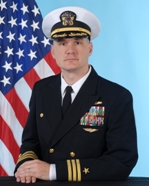
Command/Skipper in the spotlight - U.S. Navy Information Operations Command Yokosuka Japan

MISSION: We provide professional and quality Cryptologic and Information Operations Augmentation, Maintenance, Signals Analysis, Administrative, Supply and Training support to our Sailors, the Forward Deployed Naval Forces, and Theater Allies.

OUR VISION: We serve at U.S. Navy Information Operations Command, Yokosuka living our core value of Honor, Courage and Commitment.
Honor - We honor country, our Navy, our naval ancestors, our shipmates, our family and ourselves by being outstanding Sailors all day, every day. "Service before self" is our core principle.
Courage - Regardless of our rank or position, we all possess the courage to offer our opinions and will speak our when we observe inequality, injustice of misconduct.
Commitment - We remain ever faithful and committed to our country, our Navy, our mission, our shipmates and our family.

Commander Douglas enlisted in the Navy December 1984 as an Electronics Technician. In 1988, he was selected for the Navy's Broadened Opportunity for Officer Selection Training (BOOST) program. He attended The George Washington University and was awarded a Bachelor of Business Administration degree in Finance. 

Upon commissioning in December 1992, he immediately joined Naval Security Group Activity (NSGA) Key West, Florida, where he served as Reporting and Analysis Division Officer, Direct Support Officer, and Operations Officer. In May 1996, he reported to USS THORN (DD-988) as Electronics Warfare Officer and Outboard Division Officer. In May 1998, he attended Naval Post Graduate School, Monterey, California, and was awarded a Master of Science degree in Space Systems Operations. He then transferred to SPAWAR Space Field Activity at the National Reconnaissance Office (NRO) in September 2000. He completed his tour as Military Assistant to the Under Secretary of the Air Force/Director, NRO. In May 2003, CDR Douglas reported to OPNAV N3/N5 DEEP BLUE, performing duties as Cryptologic/Information Operations representative. He then assumed responsibilities as Carrier Strike Group (CSG) 10, Cryptologic Resource Coordinator, embarked USS HARRY S. TRUMAN, in April 2005. For his subsequent tour, he assumed duties as Information Warfare (IW) Junior Officer Detailer in September 2006. In November 2009, CDR Douglas was awarded a Master of Arts degree in National Security and Strategic Studies from the United States Naval War College. Upon earning his degree, he reported as Executive Officer, Center for Information Dominance Corry Station and Officer-in-Charge, Center for Information Dominance Detachment Corry Station. He assumed his current responsibility as Commanding Officer, Navy Information Operations Command, Yokosuka, Japan, in July 2011. 

Commander Douglas' awards and decorations include the Defense Meritorious Service Medal, Meritorious Service Medal (3), Joint Commendation Medal, Navy and Marine Corps Commendation Medal (2), Navy and Marine Corps Achievement Medal (3), Good Conduct Medal, and various unit and campaign awards.

Tuesday, October 9, 2012

The Pattern – of the successful leader

There is a pattern in the fundamental traits of character that can be identified with the successful naval officer.

• The pattern includes
     o Selfless desire to serve their Sailors
     o The ability to accept responsibility for decision making
     o A “sixth sense” for decision making
     o They aren’t “yes men”
     o They read and write widely
     o They accept opportunities to work longer hours and face greater challenges than their peers
     o They are concerned and considerate of their Sailor
     o They delegate
     o They try to “fix the problem and not the blame”

Monday, October 8, 2012

A Difference Maker's Manifesto

  • We will always give more than we take. We'll share all that we have.
  • We reject complacency, mediocrity, conformity, and dependency. 
  • We are not held captive by fear of failure or anything else. 
  • We are fueled by vision and passion, governed by principles, guided by ideals and values.
  • We do not succeed through luck or chance. We succeed through deliberate, conscious effort. 
  • We are not entitled to the fruit of another man’s labor. 
  • Our lives, careers and results are our responsibility. We are not victims of circumstance. 
  • We are victors by choice and determination. We aren't going to quit.
  • We live lives of purpose, not excuses.
  • We don't enjoy the security of a safe harbor, but prefer the exhilaration of the open sea. 
  • While others complain about problems and obstacles, we seek to create opportunities and solutions. 
  • We are relentlessly committed to sustained improvement. Steady strain on all lines.
  • We are not afraid to act and fail; failure is simply accelerated learning and training for tomorrow's challenges. 
  • We value persistence as much as natural talent and intelligence. We may not be the smartest in the room but we're not leaving until the job is finished.  You can count on that.
  • Where others are content to gnaw on the bones of the security of the status quo, we feast on the meat of change and new ideas. 
  • While others criticize us from the cheap seats, we work relentlessly to change things for the better.  You'll find us on the field of play still practicing our craft long after the others have quit.
  • While others are blaming, we are busy building teams and collaborating. 
  • We intend to leave a legacy of service, contribution, participation and leadership. 

WE WILL MAKE A DIFFERENCE !  Join us.

Sunday, October 7, 2012

Command/Skipper in the spotlight: U.S. Navy Information Operations Command Misawa, Japan

The origin of U.S. Navy Information Operations Command, Misawa dates back to December 1945 when RM1 Brillhart was Petty Officer in Charge of COMMSUPACT in Ohminato, Japan. In April 1946, COMMSUPACT operations moved to Yokosuka, Japan. Twelve years later operations were relocated to Kamiseya, Japan with CDR C. M. Smith as head of NAVSECGRU Department NAVCOMMSTA Kamiseya. U. S. Naval Security Group Activity, Kamiseya was established on 15 January 1960, under the command of CAPT E. W. Knepper. The activity remained on the Kanto Plain until March 1971 when most functions of NIOC Kamiseya were moved to Misawa. On 1 July 1971, U.S. Navy Information Operations Command, Misawa was commissioned under the command of CAPT G. P. March.

Commanding Officer
CDR Kelley is a native of Barnstable, Massachusetts, and a graduate of Norwich University, Northfield, Vermont.
Afloat, CDR Kelley’s early assignments include service as the Intelligence Officer for Marine Medium Helicopter Squadron 266 participating in “Eyes over Mogadishu” and Operation CONTINUE HOPE. After service in Somalia, he redeployed for Operation SUPPORT DEMOCRACY in Haiti and also served with a Marine Fighter-Attack Squadron during Operation DENY FLIGHT over the Balkans. Additional, operational assignments include duty as Assistant Intelligence Officer on the staff of Commander, Carrier Group Four and as Assistant Chief of Staff for Intelligence (N2), Commander, Carrier Strike Group Eight/USS DWIGHT D. EISENHOWER Strike Group. While assigned to Strike Group Eight, CDR Kelley served as N2 for the U.S. Navy’s Task Force 50 in the Northern Arabian Sea during Operation ENDURING FREEDOM. 


Ashore assignments include duty at the Office of Naval Intelligence, Joint Analysis Center Molesworth, U.K., Joint Chiefs of Staff (JCS J2), and the U.S. Pacific Command’s Joint Intelligence Operations Center (PACOM JIOC). 

CDR Kelley is an Intelligence Officer, Information Dominance Warfare Officer, and Joint Qualified Officer. He holds a Master’s Degree in National Security Affairs from the Naval Postgraduate School (1998) and diplomas from the Defense Language Institute (1998) as well as the Joint Forces Staff College (2006). 

CDR Kelley is a recipient of the Office of Naval Intelligence’s Edwin Layton Award for Leadership.

Saturday, October 6, 2012

CNO's TENETS


The key considerations we should apply to every decision:
  • Warfighting First:  Be ready to fight and win today, while building the ability to win tomorrow.
  • Operate Forward:  Provide offshore options to deter, influence and win in an era of uncertainty.
  • Be Ready:  Harness the teamwork, talent and imagination of our diverse force to be ready to fight and responsibly employ our resources.
This doesn't apply to "BIG NAVY"; this applies to the U.S. Navy.

Friday, October 5, 2012

Leadership Embodied

A book worth reading and then rereading.

Joseph J. Thomas and Dr. Marolda have put together a wonderful book with 49 stories of true Navy leaders. They captured the essence of the leadership skills of those 49 Navy Sailors and Marines very well. This is a must read for any student of leadership. This book was originally funded by the class of 1978 at the U.S. Naval Academy as a gift to the fine men and women studying at the USNA to become Naval officers. You have an opportunity, through this book, to share in their learning. Don't miss the opportunity to purchase this book. Contact me and I will send you a suitable chapter 50 about another great Navy leader - CWO4 Wallace Louis Exum. 

Back in 2005, the Leadership, Ethics, and Law Department (LEL) of the U.S. Naval Academy put together a compendium of short biographical essays focusing on naval (Navy and Marine Corps) personnel who have embodied certain leadership characteristics.

Joseph J. Thomas Ph.D. is the Chair and Distinguished Professor of Leadership at the United States Naval Academy Annapolis.


Thursday, October 4, 2012

Command Guidance - USMC Style

From: Commanding Officer, Marine Attack Squadron 211

To: Squadron Attack Pilots

Subj: COMMANDER’S GUIDANCE FOR SQUADRON ATTACK PILOTS

1. Professional hunger.

My goal is to identify those Officers who want to be professional attack pilots and dedicate the resources required to build them into the flight leaders and instructors that are required for the long-term health of our community. This is not a socialist organization. We will not all be equal in terms of quals and flight hours. Some will advance faster than others, and because this is not a union, your rate of advancement will have nothing to do with seniority. Your rate of advancement will instead be determined by your hunger, professionalism, work ethic, and performance.

If flying jets and supporting Marines is your passion and your profession, you are in the right squadron.

If these things are viewed simply as your job, please understand that I must invest for the future in others. Your time in a gun squadron might be limited, so it is up to you to make the most of the opportunities that are presented.

2. Professional focus.

Our approach to aviation is based upon the absolute requirement to be “brilliant in the basics.”

Over the last few years Marine TACAIR has not punted the tactical nearly so often as the admin. Sound understanding of NATOPS, aircraft systems, and SOPs is therefore every bit as important as your understanding of the ANTTP and TOPGUN. With this in mind, ensure the admin portions of your plan are solid before you move onto objective area planning. Once you begin tactical planning, remember that keeping things “simple and easy to execute” will usually be your surest path to success. If the plan is not safe, it is not tactically sound.

3. Attitude.

I firmly believe in the phrase “hire for attitude, train for skill.”

Work ethic, willingness to accept constructive criticism, and a professional approach to planning, briefing, and debriefing will get you 90% of the way towards any qualification or certification you are pursuing. The other 10% is comprised of in-flight judgment and performance, and that will often come as a result of the first 90%. Seek to learn from your own mistakes and the mistakes of others. Just as a championship football team debriefs their game film, we are going to analyze our tapes and conduct thorough flight debriefs. It has often been said that the success of a sortie is directly proportional to the caliber of the plan and brief. The other side of this coin is that the amount of learning that takes place as a result of a sortie is directly proportional to the caliber of the debrief.

4. Moral courage.

Speak up if something seems wrong or unsafe.

We all know what the standards are supposed to be in Naval Aviation and in the Corps. Enforce them! When we fail to enforce the existing standards, we are actually setting and enforcing a new standard that is lower.

5. Dedication.

If you average one hour per workday studying, 6 months from now you will be brilliant. That is all it takes; one hour per day. As you start to notice the difference between yourself and those who are unable to find 60 minutes, I want you to know that I will have already taken note.

Then, I want you to ask yourself this question: “How good could I be if I really gave this my all?”

6. When all else fades away, attack pilots have one mission: provide offensive air support for Marines.

The Harrier community needs professional attack pilots who can meet this calling.

It does not require you to abandon your family. It does not require you to work 16 hours per day, six days per week. It requires only a few simple commitments to meet this calling: be efficient with your time at work so that you can study one hour per day; be fully prepared for your sorties and get the maximum learning possible out of every debrief; have thick skin and be willing to take constructive criticism; find one weekend per month to go on cross country. When you are given the opportunity to advance, for those few days go to the mat and give it your all, 100%, at the expense of every other thing in your life.

To quote Roger Staubach, “there are no traffic jams on the extra mile.”  ((But I hope to see you there from time to time)).

If you can be efficient during the workweek, give an Olympian effort for check rides and certifications, and are a team player, the sky will literally be the limit for you in this squadron.

C. K. RAIBLE

MORE about Lt Colonel Raible in a future post.  Is he a MOH candidate?  Perhaps he should be.

Wednesday, October 3, 2012

Command/Skipper in the spotlight: Navy Information Operations Command Pensacola, Florida


Mission
 Execute Computer Network Defense and Digital Network Intelligence objectives supporting naval and national cyber supremacy.
Vision
Total Force Team of the highest character, collaboratively delivering Computer Network Defense focused Digital Network Intelligence expertise today, with an eye towards deliberately expanding the depth and breadth of Computer Network Operations proficiency necessary to both shape and satisfy the requirements of tomorrow.

Commander Pat Count assumed command of NAVIOCOM Pensacola, Florida in July 2012.  

CDR Pat Count, a native of N. Augusta, SC, enlisted in the Navy in 1986 as a Cryptologic Technician (Interpretive). He attended Arabic language training at the Defense Language Institute (DLI) winning the Maxwell D. Taylor Award. In 1988 he was assigned to Naval Security Group Activity (NSGA) Athens, Greece deploying to U.S. Sixth Fleet combatants and to Operation DESERT SHIELD. In 1990 he reported to NSGA Fort Meade, MD where he deployed to Commander Middle East Force and Operation DESERT STORM. 

Awarded a Naval ROTC scholarship, CDR Count attended the University of South Carolina graduating Magna Cum Laude and Phi Beta Kappa earning a Bachelor’s Degree and a commission in 1995.

After returning to DLI to study the Russian language, in July 1996 CDR Count reported to NSGA Misawa, Japan and served as a Division Officer and Special Evaluator on board EP-3E aircraft of Fleet Air Reconnaissance Squadron One (VQ-1) earning designation as Naval Aviation Observer and accumulating over 1,700 flight hours. During this tour he deployed throughout Asia, the Middle East and to Operation SOUTHERN WATCH. 

In June 1999 CDR Count attended the Naval Postgraduate School in Monterey, CA earning a Master’s Degree in Electrical Engineering (MSEE) and was awarded the IEEE Monterey Chapter Outstanding Student Thesis Award. In 2001, he was assigned to the Commander, U.S. Naval Forces Central Command/U.S. Fifth Fleet where he served as Signals Intelligence Collection Manager during Operation ENDURING FREEDOM. 

In February 2003, CDR Count reported to NSGA Fort Gordon, Georgia where he served as Operations Officer and as the first Fleet Information Operations Center (FIOC) Department Head (N3). In November 2004, CDR Count was assigned as Executive Officer and oversaw the Command’s transition to Navy Information Operations Command (NIOC) Georgia and its growth to nearly 1,000 Sailors and Major Command status. 

In November 2006, CDR Count reported to the staff of the Commander, Carrier Strike Group EIGHT where he simultaneously served as Cryptologic Resource Coordinator (CRC) and Deputy Information Warfare Commander (DIWC). He deployed twice onboard USS DWIGHT D. EISENHOWER (CVN-69) and USS GEORGE WASHINGTON (CVN-73) to the U.S. Central, European, Southern and Pacific Command areas of responsibility supporting Operations ENDURING and IRAQI FREEDOM and Partnership of the Americas 2008. 

In December 2008, CDR Count reported to the U.S. European Command staff in Stuttgart, Germany where he served as Chief, Information and Cyberspace Operations Plans Branch (J39) responsible for integrating IO and Cyberspace operational concepts into theater-wide strategy, plans and operations. In August 2012, Commander Count assumed his present duties as Commanding Officer, NIOC Pensacola, FL. CDR Count is proficient in multiple languages and graduated the Naval War College Command and Staff Program with highest distinction. 

Awards include the Defense Meritorious Service Medal, Meritorious Service Medal (2), Joint Service Commendation Medal, Navy Commendation Medal (3), Joint Service Achievement Medal, Navy Achievement Medal, Combat Action Ribbon, and numerous campaign and service medals.

Tuesday, October 2, 2012

Loyalty - up and down the chain of command

While the fabric that has held society together has worn ever thinner in our modern age, it is still loyalty that lends the cloth its strength. It is loyalty that keeps the world functioning. We could not conduct business transactions or personal relationship without it. Loyalty is the idea that we are who we say we are and we will do what we say we will do. It is the hope that the integrity with which we initially encountered someone will endure indefinitely.

It’s also what keeps us unified. We live out our lives as part of agreed upon norms that allow us to operate from day to day. We need to know who we can count on. We all understand that ideally, friends will have your back, lovers will remain true, and businesses will not cheat you out of your money. When someone is disloyal, they break from these expectations and weaken the trust that holds us together.


From The Philosophy of Loyalty by Josiah Royce
Harvard Lecture Series 1908

Monday, October 1, 2012

Stray voltage on the net

At a recent Freedom Through Vigilance Association (FTVA) meeting at headquarters Air Force Intelligence Surveillance Reconnaissance, one of the Air Force briefers announced the closing of the Misawa Security Operations Center in Japan in 2014. Sad news for me from a nostalgic point of view. I began my cryptologic career at U.S. Naval Security Group Activity Misawa, Japan. I also met my wife there. Truly the end of a grand era if they follow through with these closure plans. I have not seen an announcement of any kind from the Navy but I hope some of that mission finds its way to U.S. Navy Information Operations Command Yokosuka, Japan.